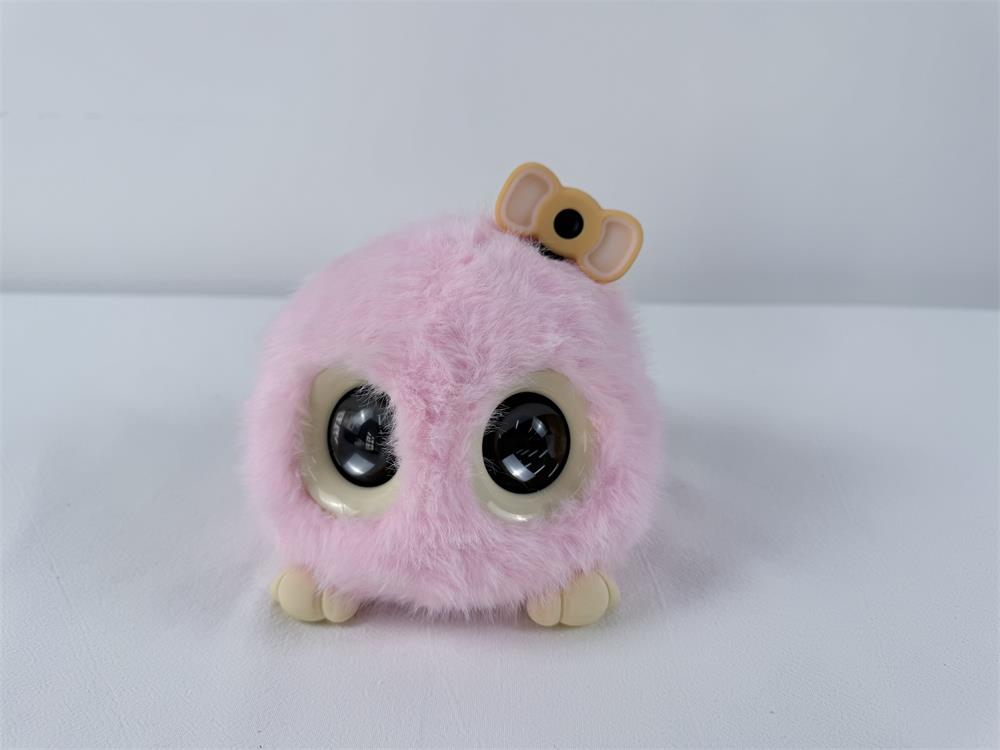
1. Most Obvious Difference #1: From "Single Model" to "Free Switching Among Three Models"
The vast majority of AI pet robots currently on the market are bound to a single AI model. This brings two problems: first, model capability is limited by the manufacturer's choice, and user experience may be poor in specific languages or scenarios; second, a single model may face compliance, network, or localization barriers in different national markets.
The most prominent difference of the TATA series is the simultaneous integration of three mainstream large models: Doubao, Qwen, and ChatGPT. Users can freely switch according to scenarios:
-
For daily Chinese interaction, prioritize Doubao or Qwen;
-
For English and international scenarios, switch to ChatGPT;
-
For specific regions with localization or compliance needs, flexibly choose the appropriate model.
This "model-agnostic" design turns TATA from "hardware bound to one AI capability" into "a platform that can adapt to multiple AI capabilities." For channel customers, the same product can enter different language and regulatory environments more smoothly, significantly reducing market entry costs.
2. Most Obvious Difference #2: From "Single Form" to "Visual + Emotional" Dual Product Lines
Most AI pet products use a single hardware form — either a desktop voice speaker or a simple motion robot — with relatively homogeneous functions and appearance. TATA forms a clear division of labor through two products:
DF583 Piyta: The Visual School.
Equipped with a 100° fisheye lens, giving AI pets wide-angle visual capability in desktop scenarios for the first time. It is not just a voice terminal; it can conduct remote video interaction, wide-angle home environment monitoring, and dynamic perception around the desktop. This clearly separates TATA from voice-only competitors in the "seeing" dimension.
DF585 Buita: The Emotional School.
Uses dual 1.28-inch TFT screens, achieving dynamic expressions and split-screen information display through two 240×240 screens. Among its six ID color options, "Brown Long Fur" further strengthens the pet attribute. It feels more like a companion with "expressions and appearance personality" rather than a cold electronic device.
This dual-form layout allows TATA to cover both "practical monitoring" and "emotional companionship" needs simultaneously — something most single-form AI pets cannot achieve.
3. Most Obvious Difference #3: Lightweight RTOS Architecture with Device-Cloud Collaboration
Many AI pets stack high-performance chips on the device side in pursuit of "intelligence," resulting in high costs. The TATA series chooses a more pragmatic route: RTOS lightweight system + device-cloud collaboration.
The device side only handles real-time tasks such as sensor collection, motor control, audio playback, and local touch; complex large model inference is entirely placed in the cloud. This architecture brings three direct advantages:
-
More controllable cost: Not relying on expensive high-performance platforms helps enter the mass market;
-
More stable experience: Fast device-side response combined with strong cloud computing power balances speed and intelligence;
-
More flexible iteration: Model capability upgrades are completed in the cloud without frequent hardware replacement.
In comparison, many similar products either have excessive device-side computing power leading to high prices, or excessive cloud dependence causing experience collapse offline. TATA finds a more balanced position architecturally.
4. Most Obvious Difference #4: 20-Language Globalization Capability
Most AI pet products support a limited number of languages, usually only English and a few mainstream languages. The TATA series natively supports 20 languages, including Chinese, English, Spanish, Arabic, Japanese, Russian, and more.
This is especially important in B-end channels. SPAEXI's products are exported to more than 80 countries, and TATA's multilingual capability means channel customers do not need to develop separate software versions for each market, nor worry about unstable AI model performance in specific languages. Combined with multi-model switching, TATA's adaptability across different regions is significantly stronger than single-model, few-language products.
5. Core Advantages Summary
6. Industry Significance: AI Pets Move from "Feature Competition" to "Platform Competition"
The emergence of the TATA series marks a shift in the competitive logic of AI pet robots. In the past, products competed on "does it have voice interaction," "can it tell stories," "does it move." Now, users and channels care more about:
-
Can the product continuously evolve? Multi-model switching gives TATA stronger software vitality;
-
Can the product adapt to different markets? 20 languages give TATA true globalization capability;
-
Can the product meet different user needs? The dual-form layout lets TATA cover a wider range of use scenarios.
SPAEXI's answer through TATA is to upgrade AI pets from "single hardware products" to "configurable, customizable, globally adaptable AI pet platforms." This platform-based approach is the fundamental difference between TATA and most AI pet products, and the key to SPAEXI building long-term competitiveness in this field.



 Language
 Tiktok
 instagram
 Youtube
 +86 137-1500-3940
  E-mail