I. Global Market: A Billion‑Dollar Track Is Taking Shape
At CES 2026, AI companion robots became one of the most talked‑about categories, with 58 companies from around the world showcasing their AI toys and companion products. According to GII Research, the global AI emotional companion market was valued at $1.13 billion in 2025 and is projected to reach $1.41 billion in 2026, with a compound annual growth rate (CAGR) of 25.88%, potentially hitting $5.7 billion by 2032. Within this, the AI emotional companion pet segment is expected to grow from $394 million in 2025 to $892 million by 2032, at a CAGR of 11.7%.
In the Chinese market, the companion robot industry is also growing rapidly. Industry research data shows that the Chinese companion robot market reached approximately ¥79.6 billion in 2024 and steadily climbed to around ¥90 billion in 2025. It is projected that by the end of 2026, with on‑device AI chips and multimodal large models becoming locally adapted on the hardware side, this market size could surge toward the ¥110–140 billion range, maintaining high growth of over 20% for several consecutive years.
II. International Brands: Diverse Explorations in Companionship
Tombot (USA): AI Robotic Dogs for Dementia Patients
At CES 2025 and 2026, a U.S. company called Tombot attracted significant attention. The California‑based robotics company launched Jennie, a robotic puppy designed after a Labrador retriever, featuring realistic faux fur. Jennie is equipped with touch sensors, responds to petting and voice commands, and generates AI‑produced barks and puppy sounds. Specifically designed to assist dementia patients, it helps alleviate loneliness, anxiety, and depression. Tombot has raised $6.1 million in Series A funding, and Jennie is expected to launch in the U.S. in summer 2026 at a price of $1,500 per unit.
GROOVE X LOVOT (Japan): Putting "Love" into a Robot
Developed by Japan's GROOVE X, LOVOT – a name combining "LOVE" and "ROBOT" – prioritizes companionship over industrial functions. LOVOT has a round, huggable shape with hands designed to be easily held, inviting users to embrace it. Its eyes change with interaction, and key areas such as the neck and underarms maintain a temperature of 37–39°C, significantly reducing the mechanical feel. LOVOT has already been introduced into homes and commercial spaces across multiple cities in China, with a new store opening at Shanghai ifc mall in December 2025. As of the end of January 2025, LOVOT shipments had exceeded 15,000 units, with its primary user base being women aged 40 and above.
SwitchBot Kata Friends (Japan): From Smart Home to AI Pets
Japanese smart home brand SwitchBot launched its Kata Friends series AI pet robots – including Noa and Niko – for the first time at IFA 2025. Kata Friends are soft‑bodied AI pet robots that can move autonomously indoors, react to touch, recognize emotions, and remember daily habits. They feature 12 tactile sensor zones, autonomous navigation, obstacle avoidance, and auto‑recharging capabilities. The product received two official IFA innovation awards: "Best in IFA Next" and "Best in IFA Emerging Tech."
III. The Chinese Approach: Bean Cat DiMi's All‑Scenario Exploration
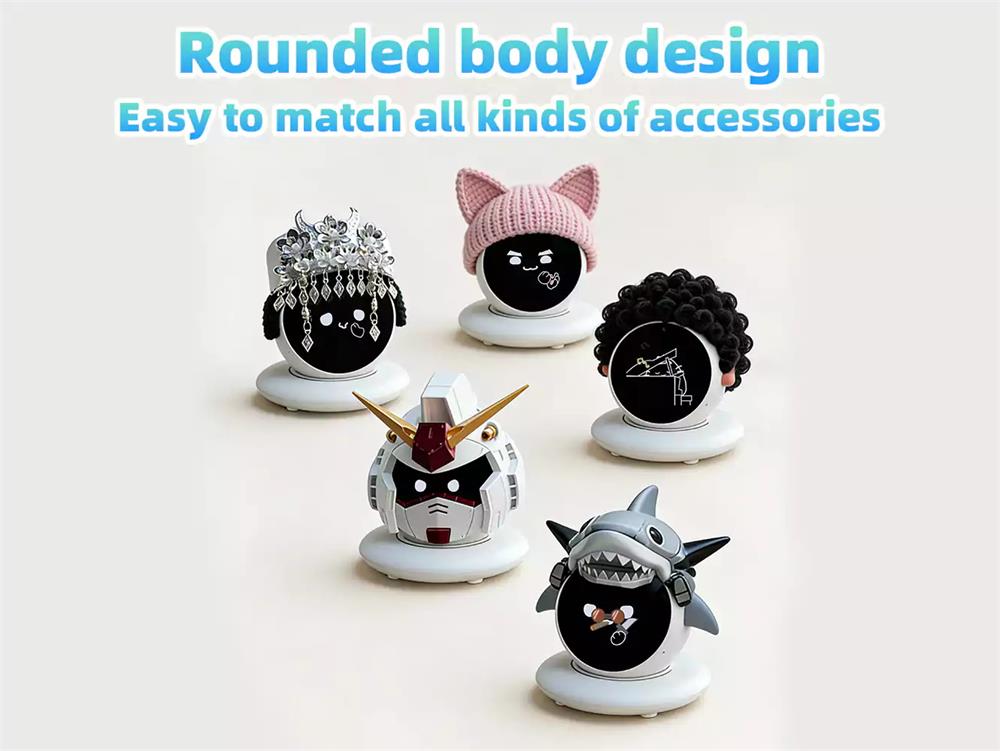
While international brands are entering the AI companionship space, Chinese manufacturer SPAEXI has also launched its own AI pet robot – Bean Cat DiMi.
Bean Cat DiMi's product philosophy stands in stark contrast to most international brands. While Tombot focuses on dementia care, LOVOT emphasizes home companionship, and Kata Friends positions itself as a family companion, Bean Cat DiMi takes a differentiated "all‑scenario" path. It is not a cold device but a friend that integrates into every moment of the user's life.
In‑Car Scenario: From "Tool" to "Playful Confidant"
In the in‑car scenario, Bean Cat DiMi's role goes far beyond that of a voice assistant. When the user sighs "It's so cold," DiMi doesn't mechanically reply "Temperature adjusted." Instead, it playfully quips: "Cold? Good. If I'm not in your heart, you're bound to get a chill." This banter‑style interaction fills the cabin with laughter. At the same time, through its built‑in AI vision system, it monitors driving status in real time and delivers humorous alerts if it detects fatigue.
Office and Daily Life: Efficient Secretary and Tea Master
In office settings, Bean Cat DiMi can generate meeting minutes with one click, automatically extract core resolutions, and set to‑do reminders via voice commands. For tea enthusiasts, it provides optimal water temperature recommendations based on the type of tea – a walking "tea encyclopedia."
Content Creation: NFC Tap‑and‑Generate for Social Media Posts
One of Bean Cat DiMi's most differentiated features is its NFC tap‑and‑generate function for content creation. By simply tapping with a smartphone, the AI automatically generates a short video, refined captions, and a nine‑grid photo layout for store visits, and can directly jump to platforms like Douyin and Xiaohongshu for publishing. For merchants, this feature enables rapid promotion and hassle‑free traffic generation.
IV. Industry Outlook: The Next Frontier for AI Companionship
From Tombot's focus on dementia care to LOVOT's home‑centric companionship, from Kata Friends' soft‑body interaction to Bean Cat DiMi's all‑scenario navigation – the global AI companion robot sector is forming a diverse product ecosystem. As the market grows rapidly, different brands are choosing distinct technological routes and application scenarios – reflecting not only competition but also the industry's maturation.



 Language
 Tiktok
 instagram
 Youtube
 +86 137-1500-3940
  E-mail